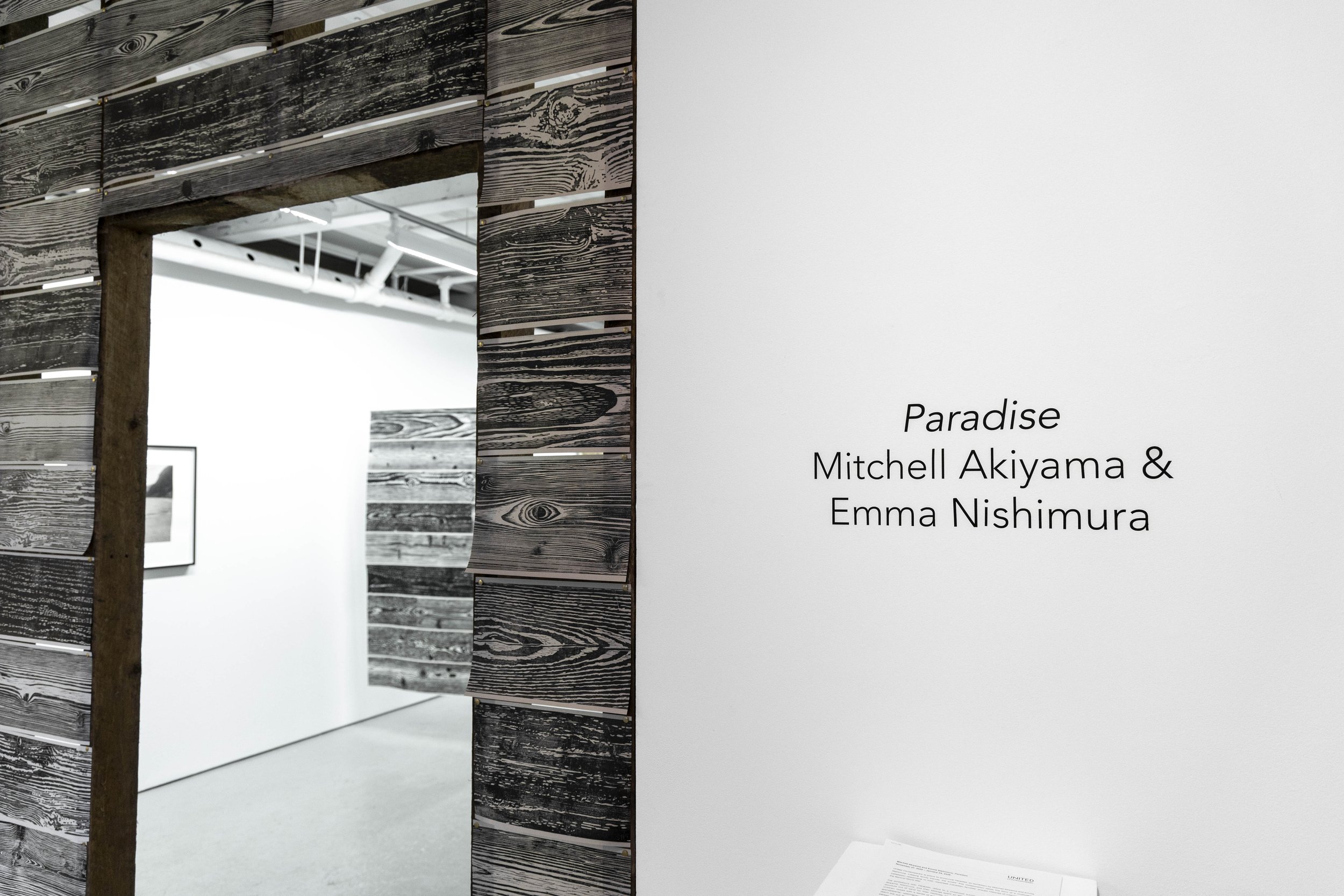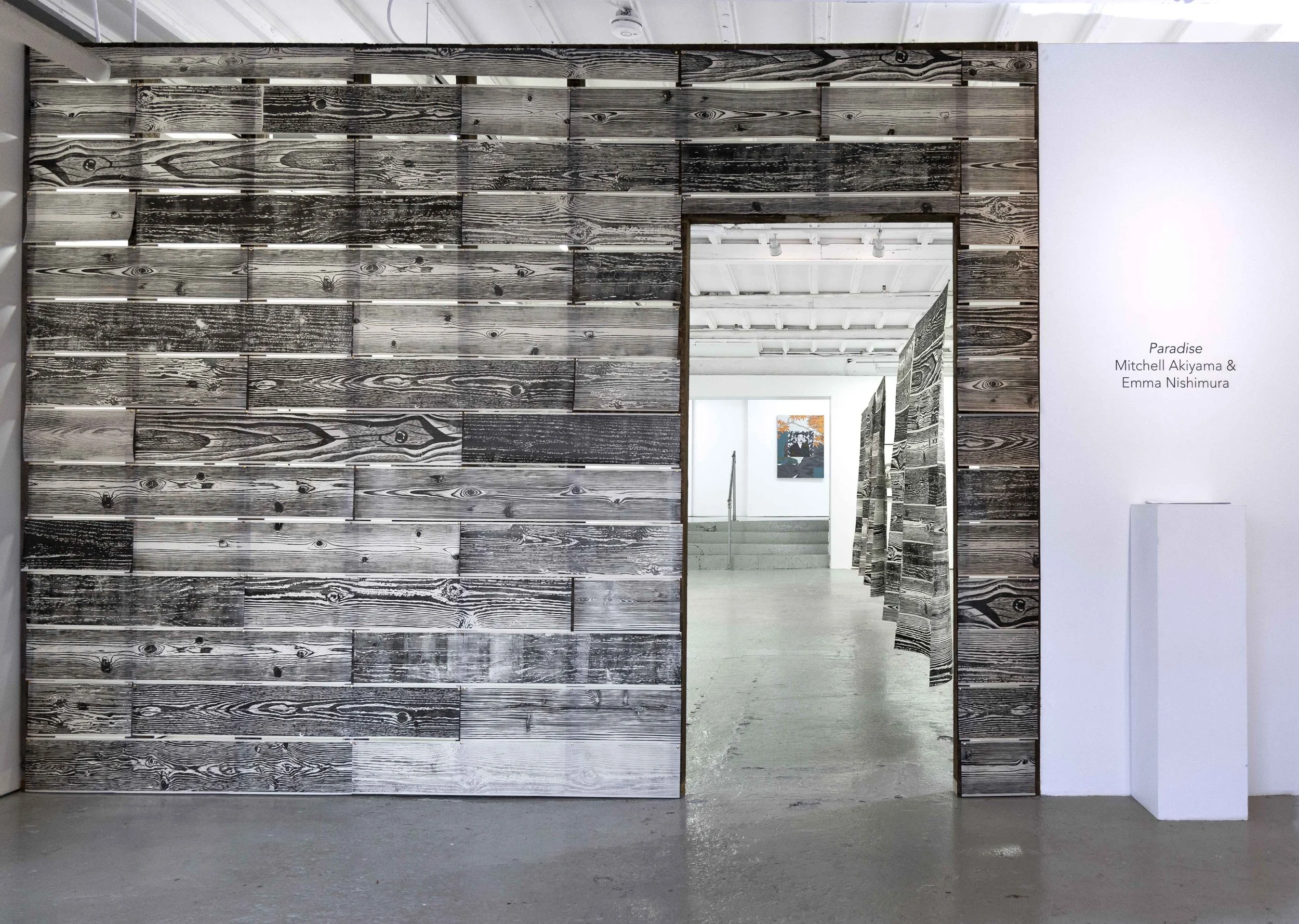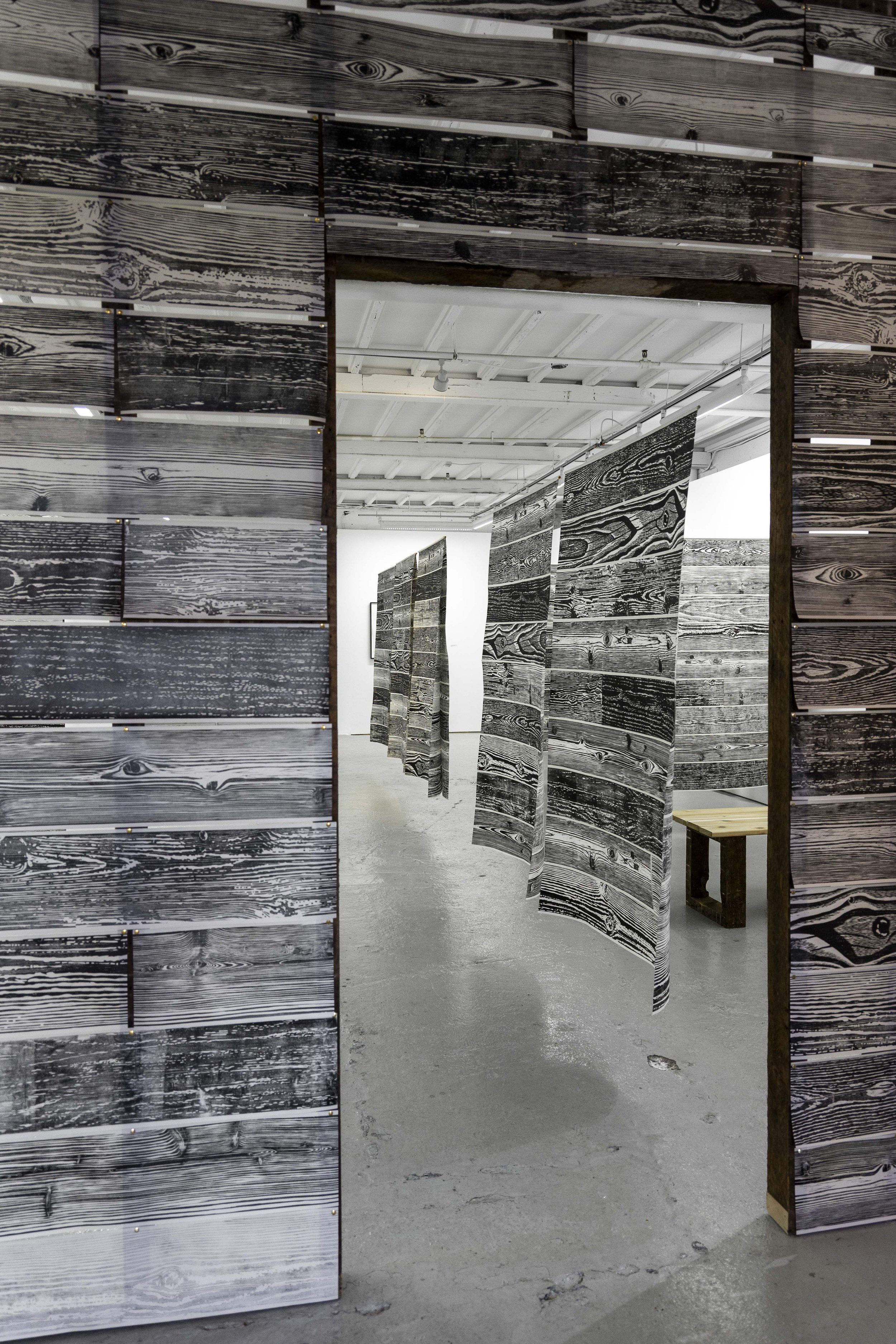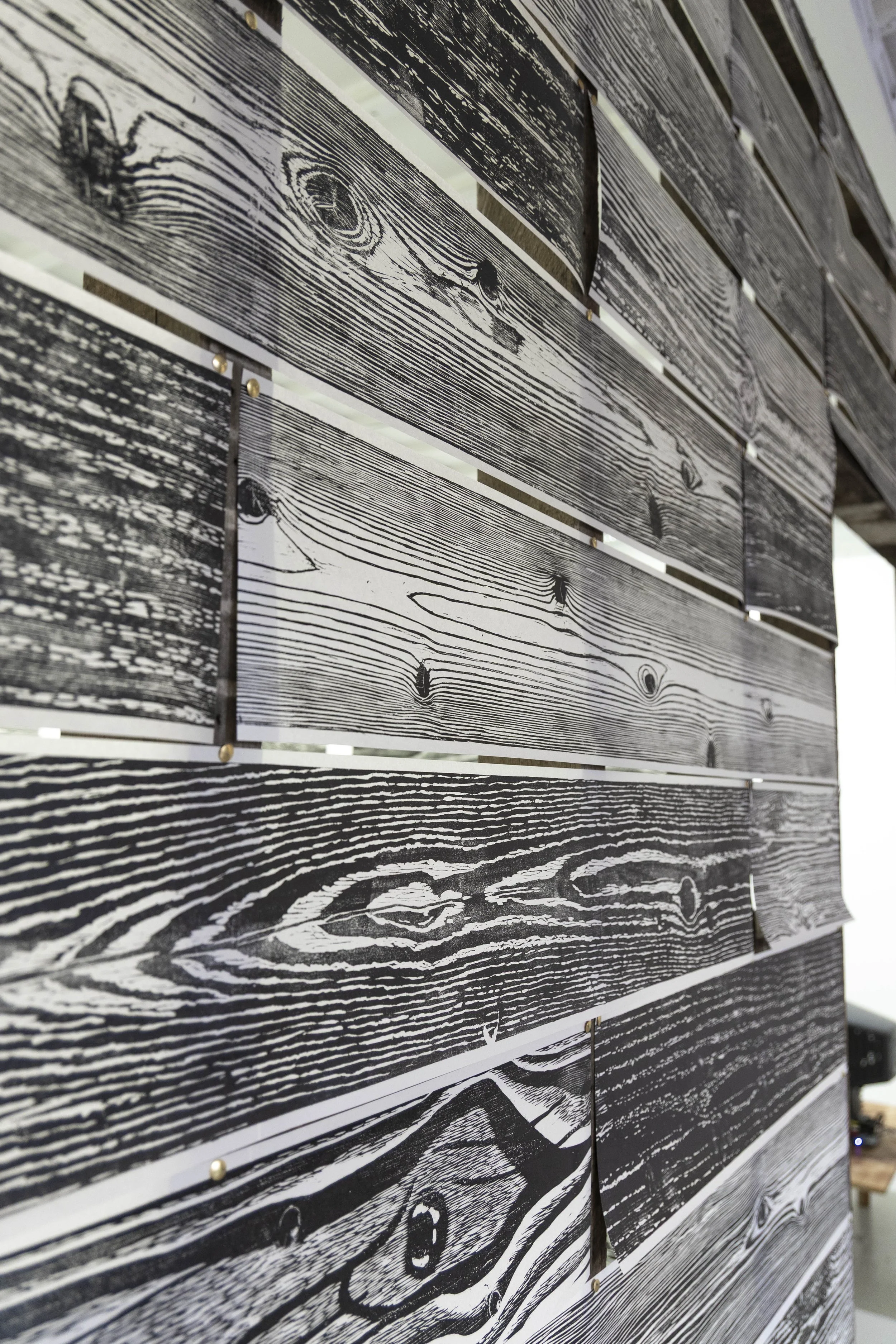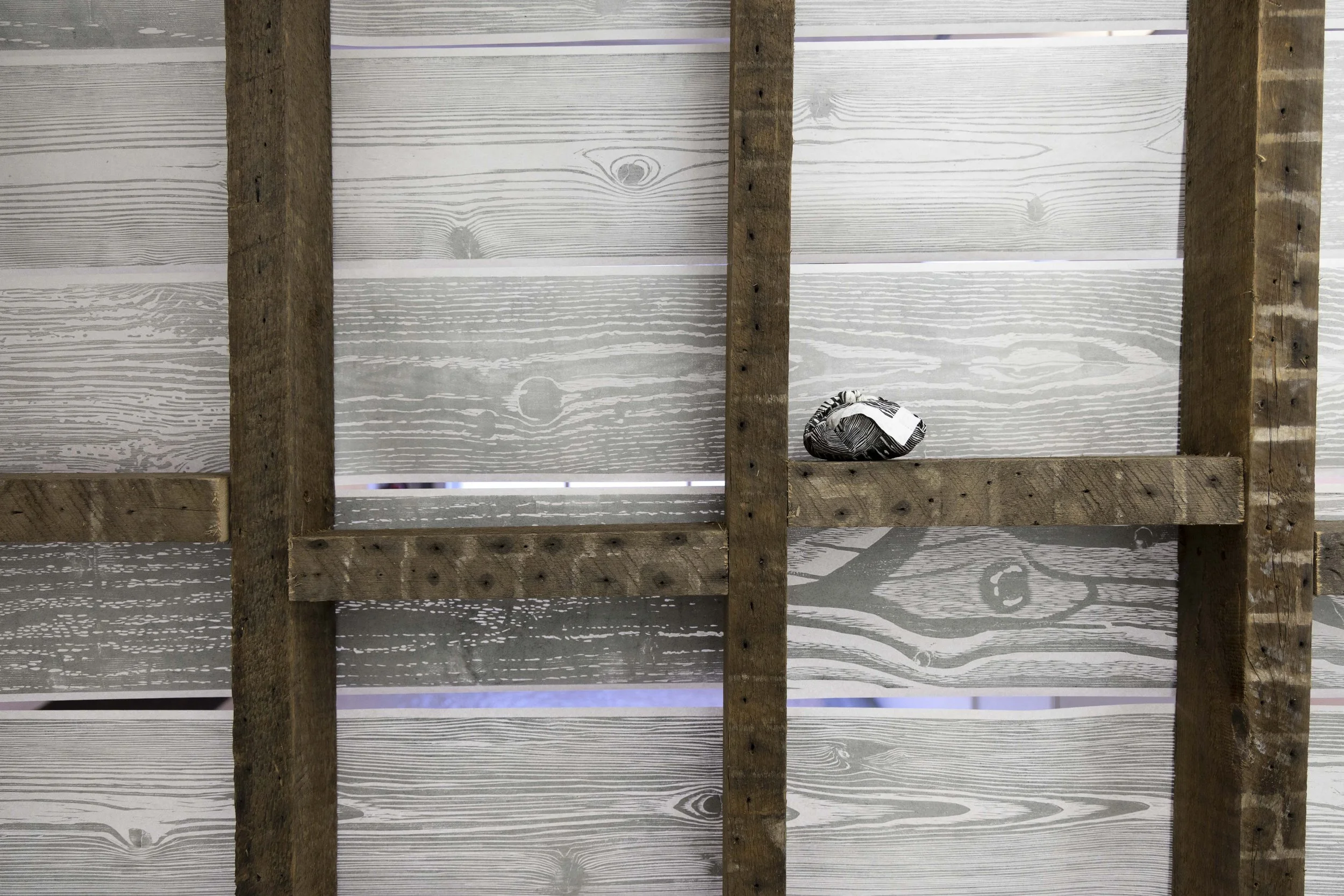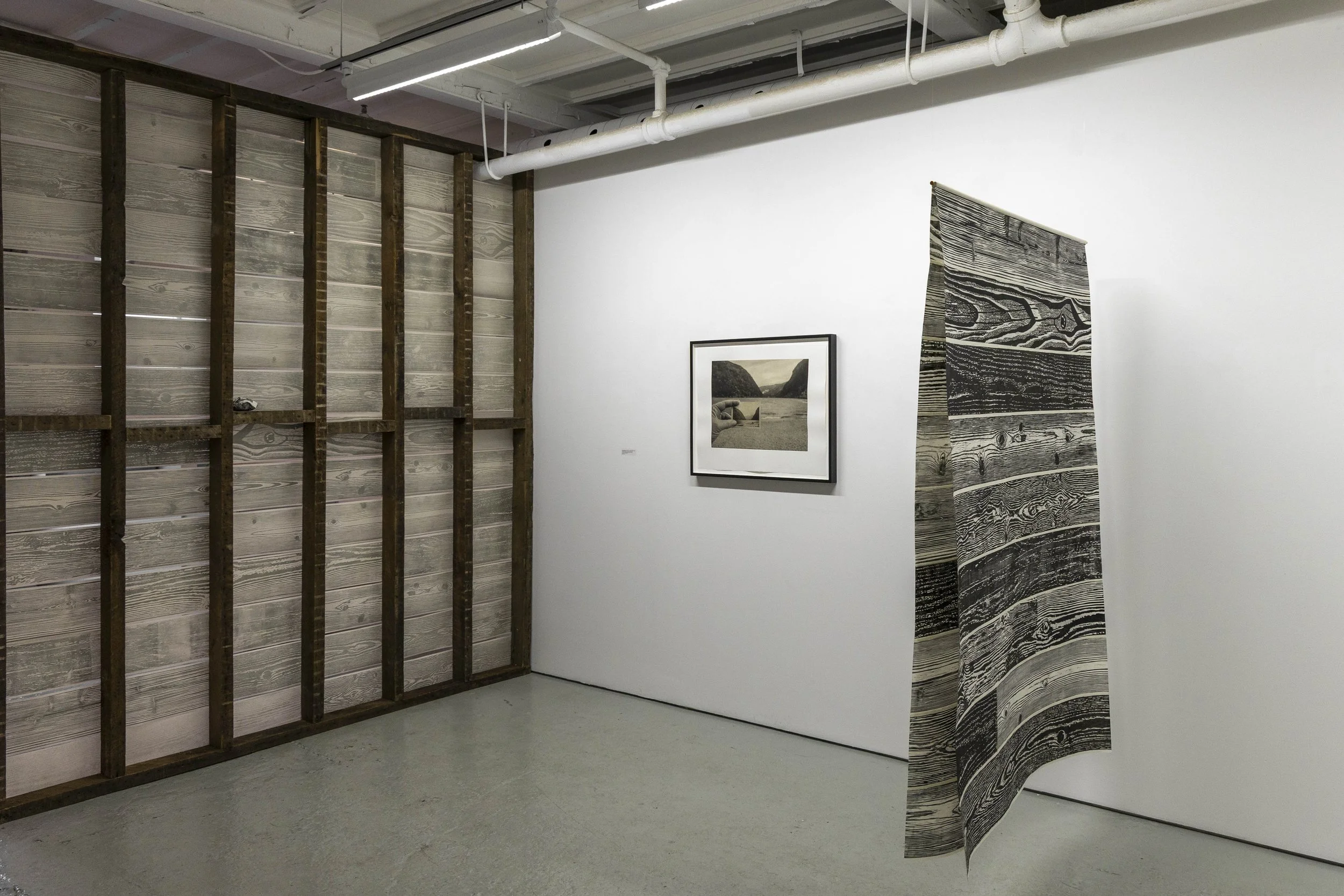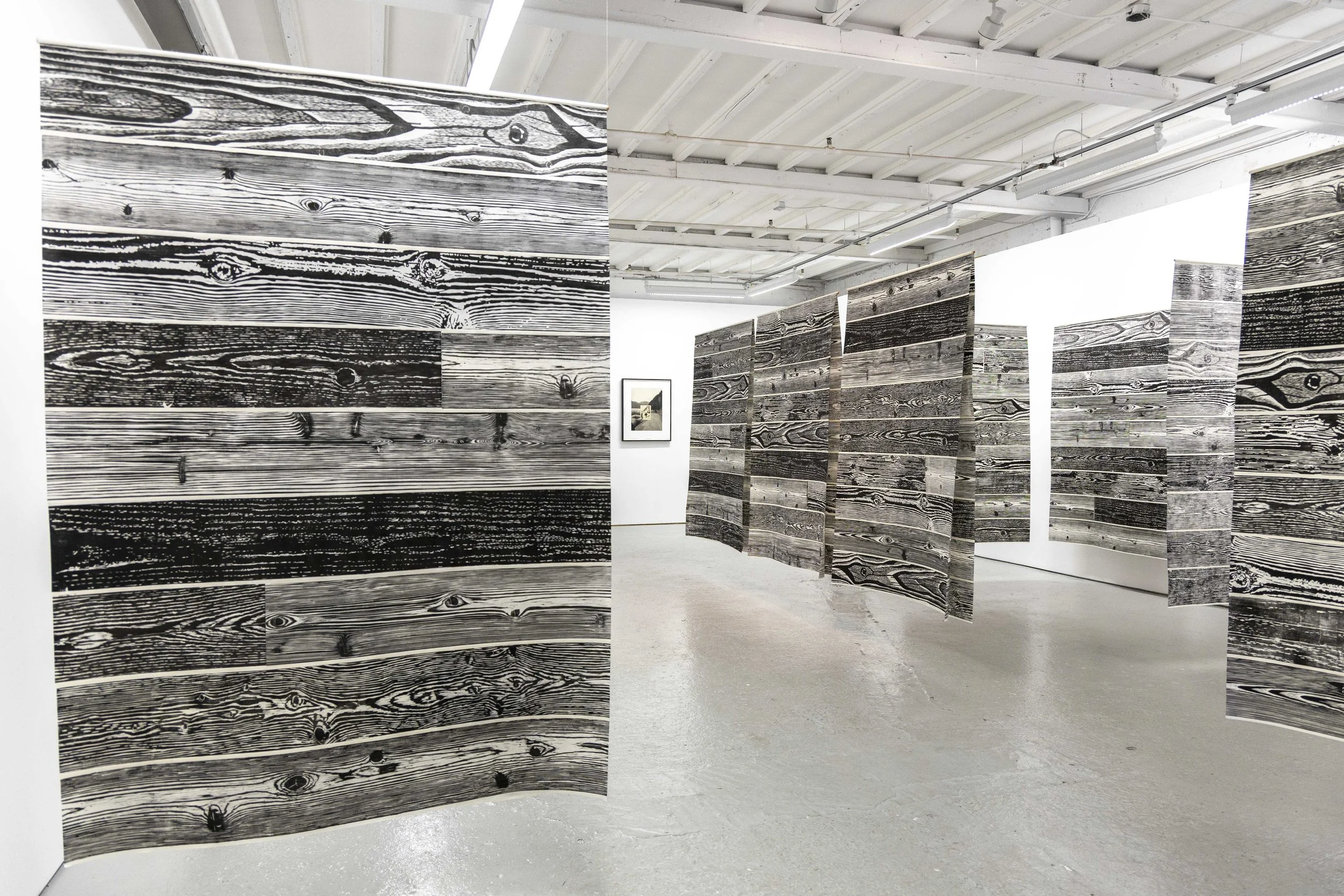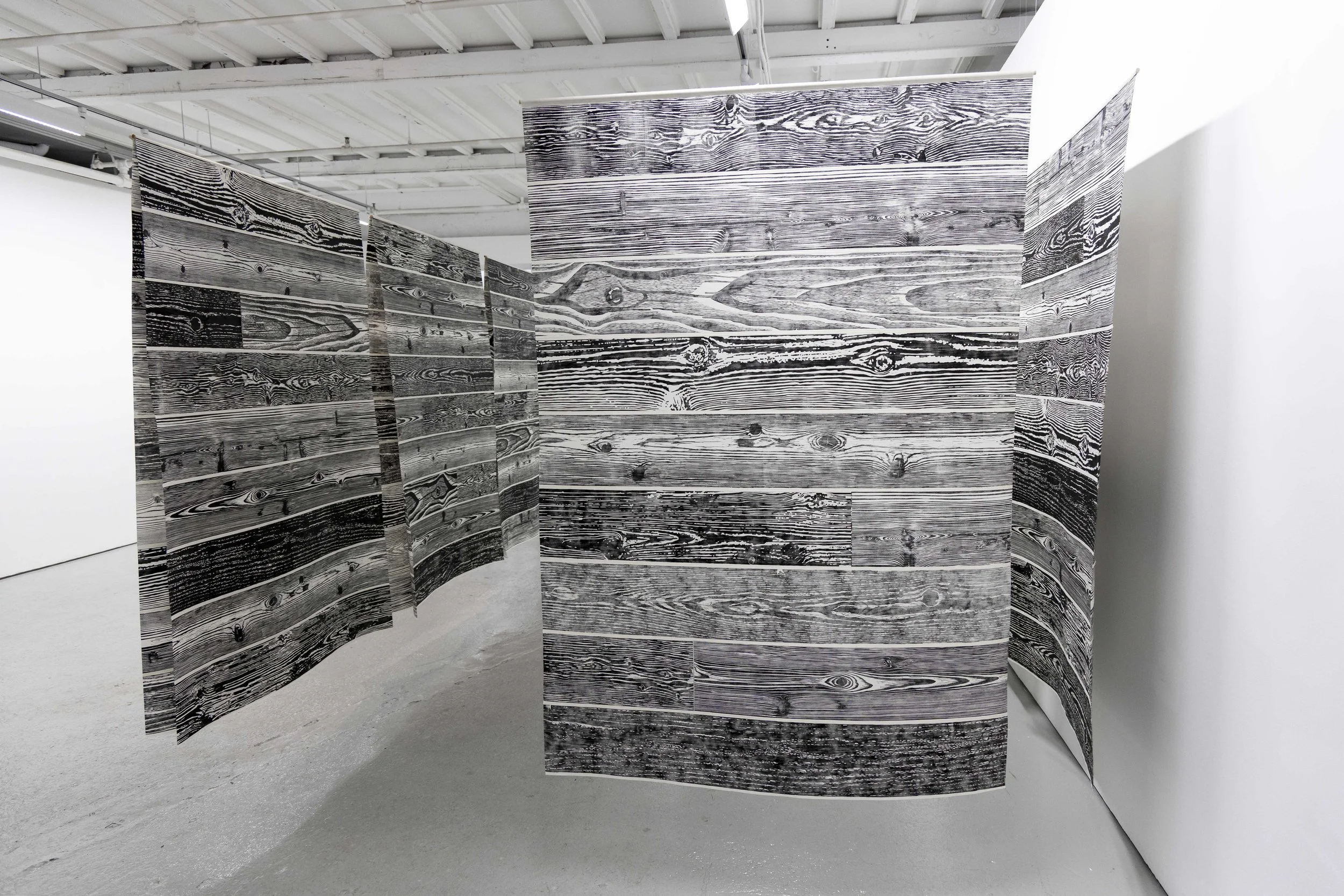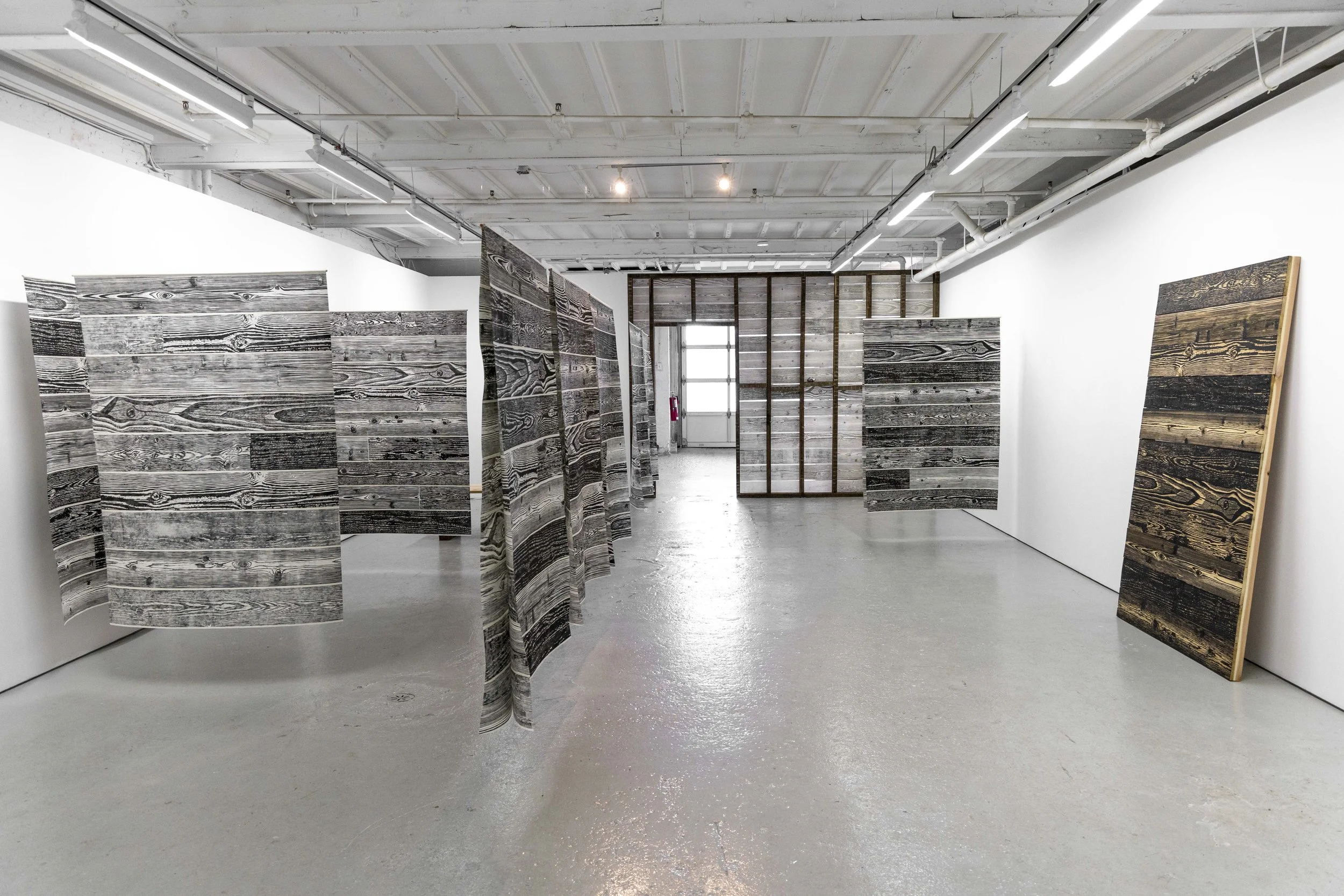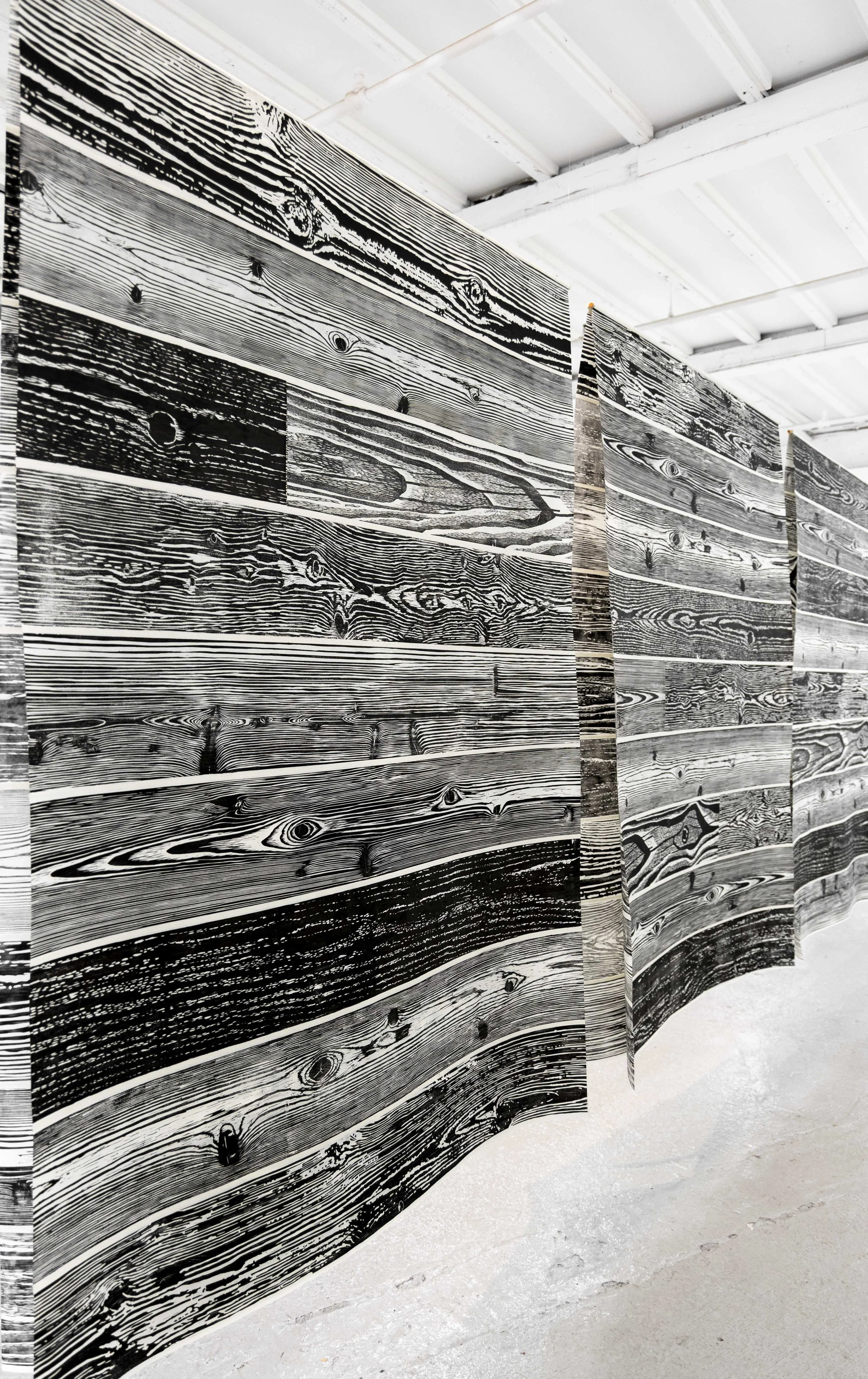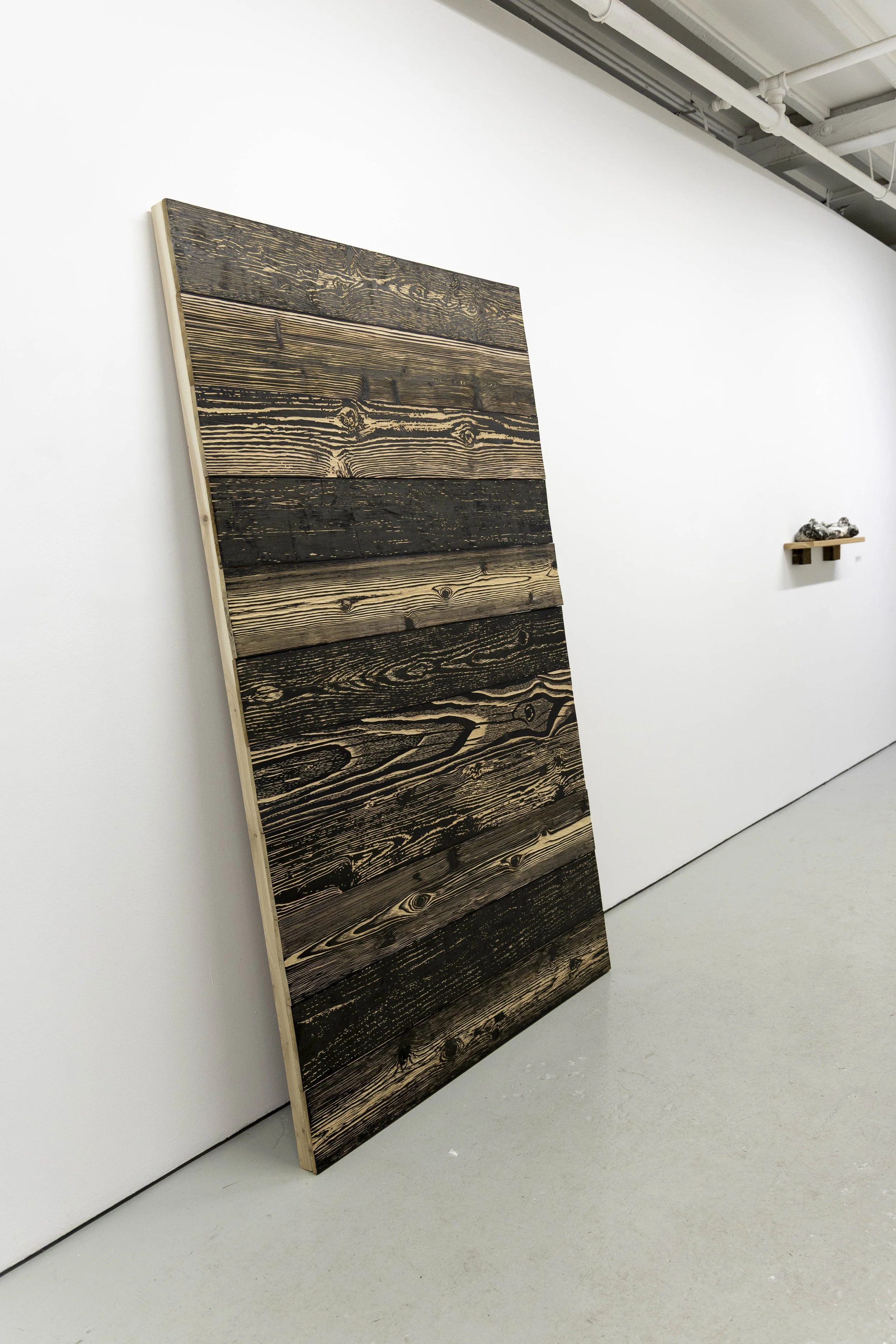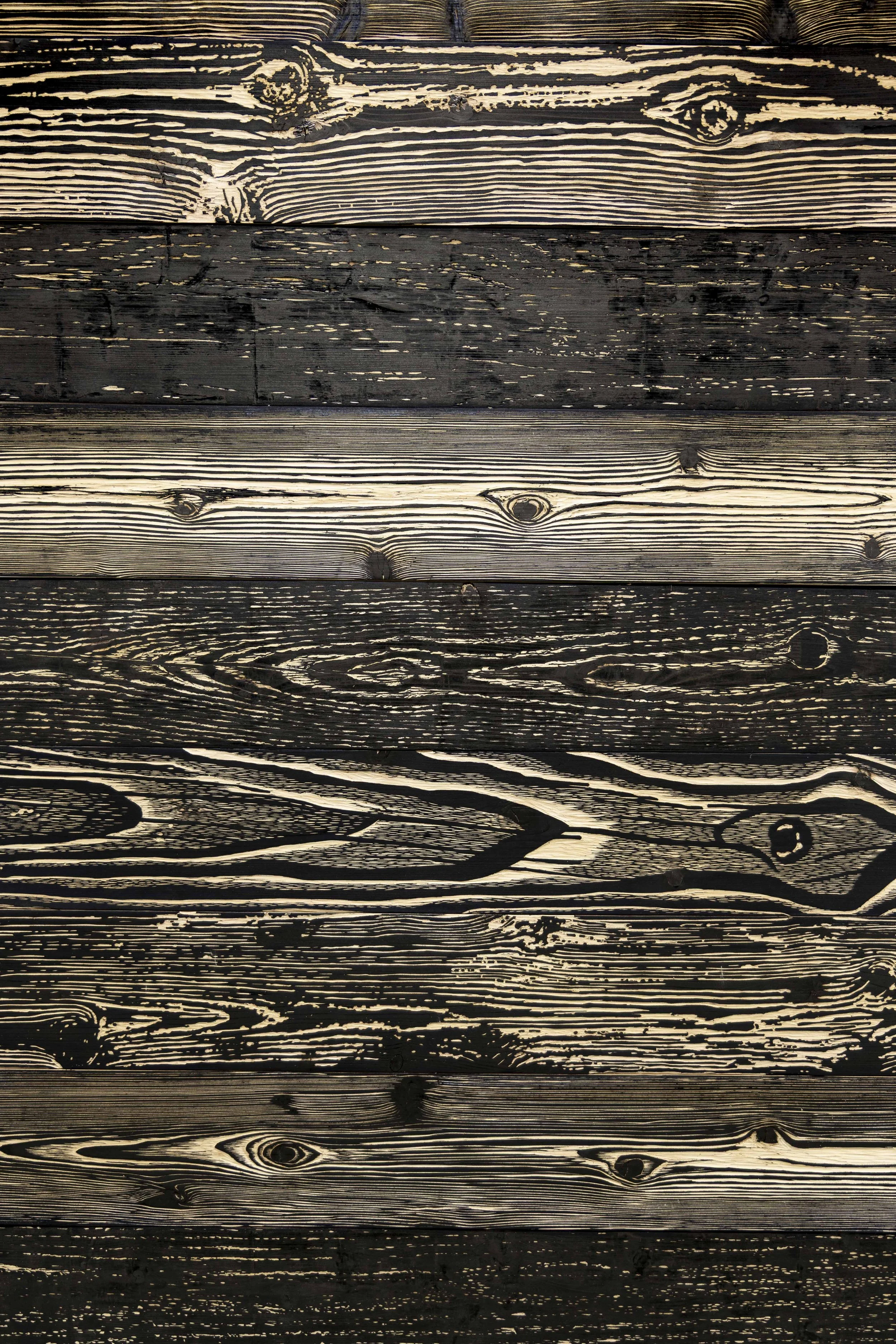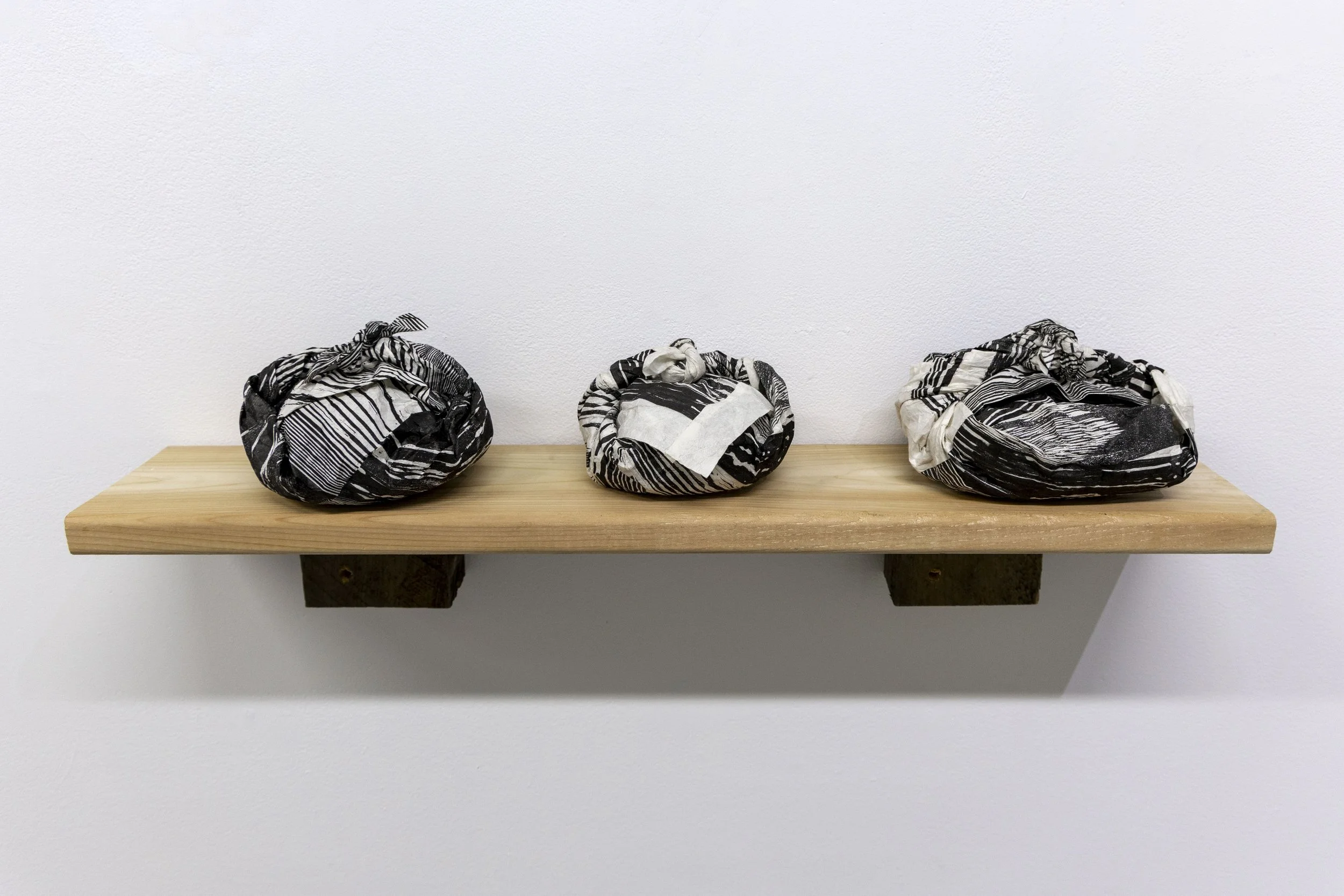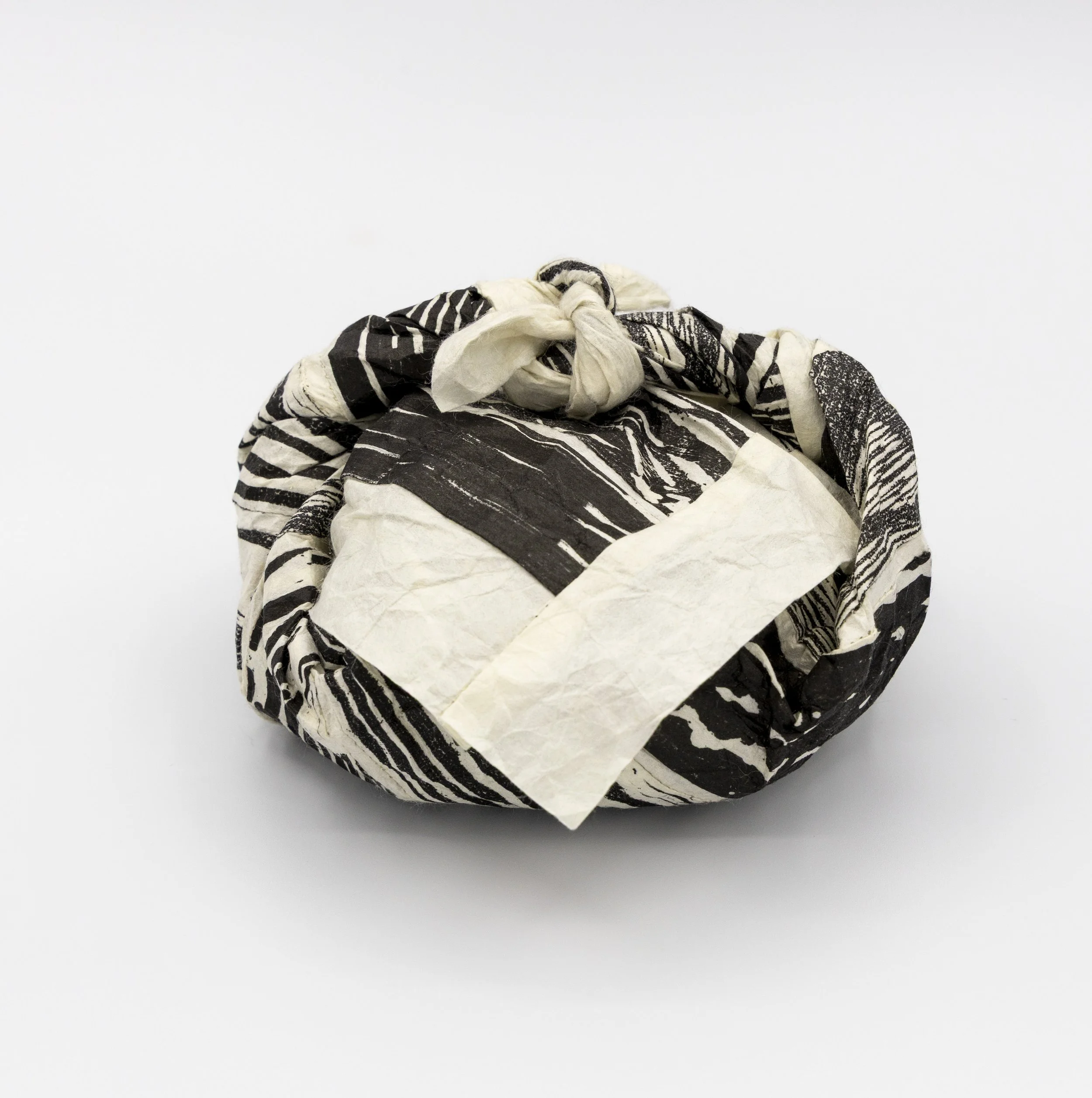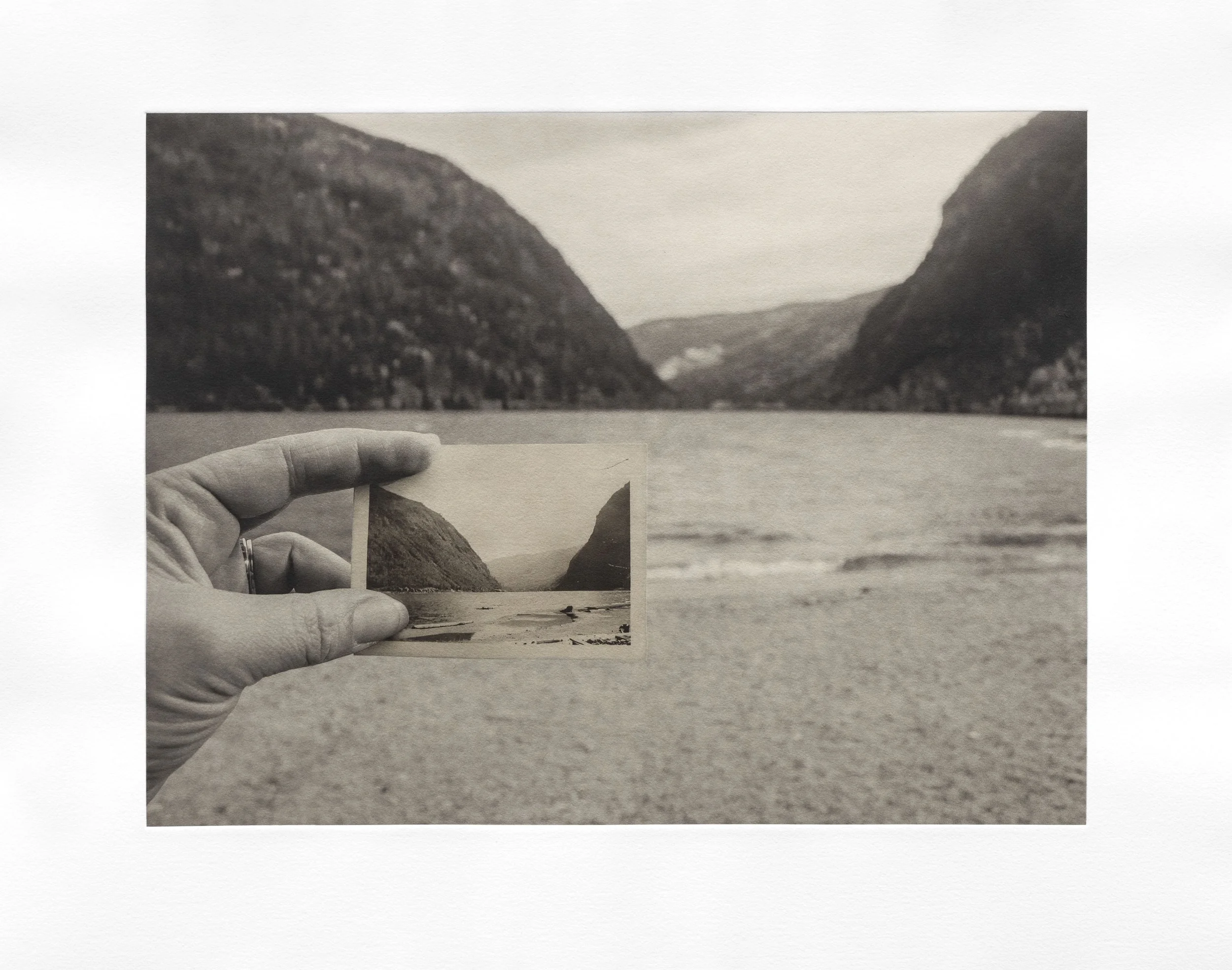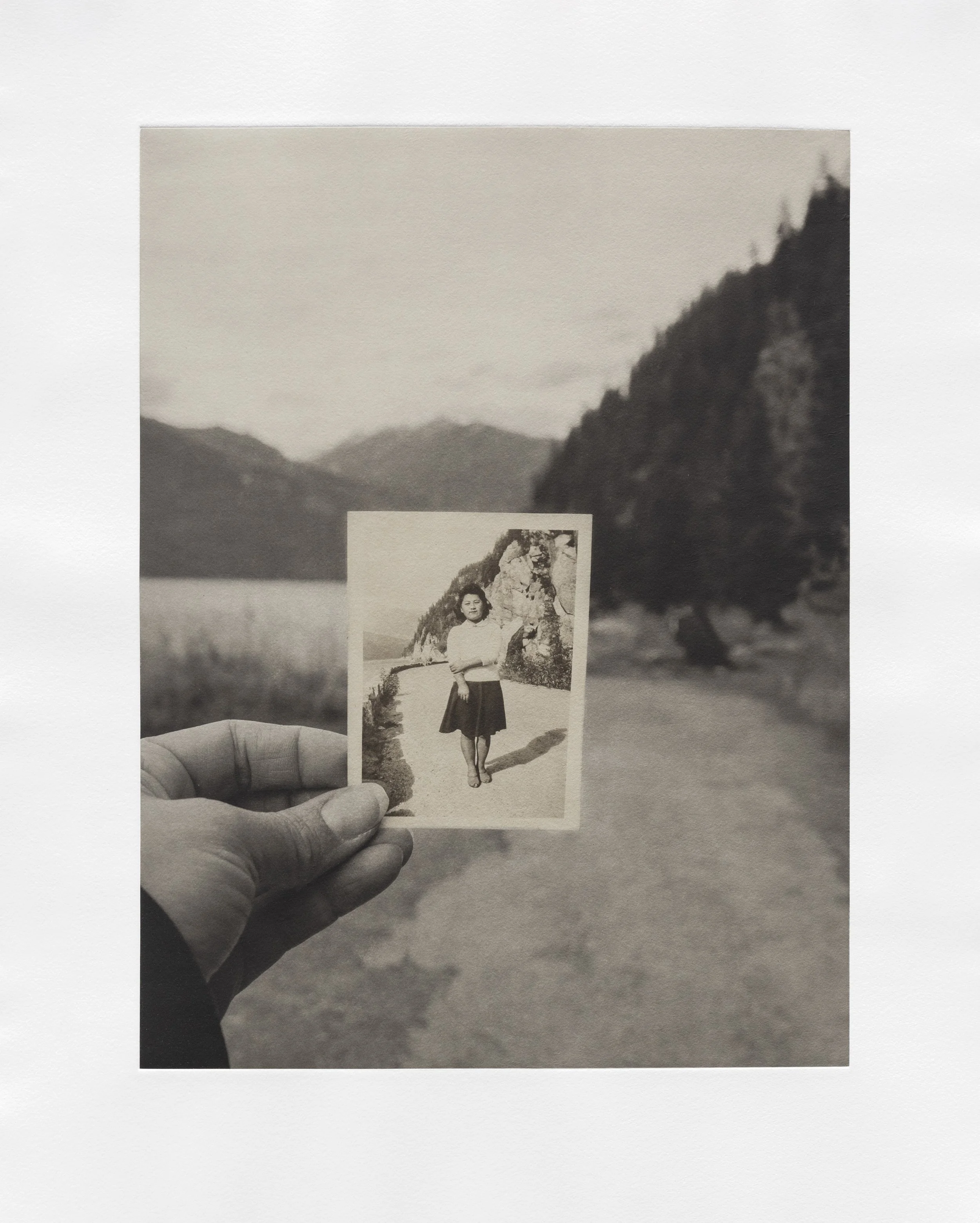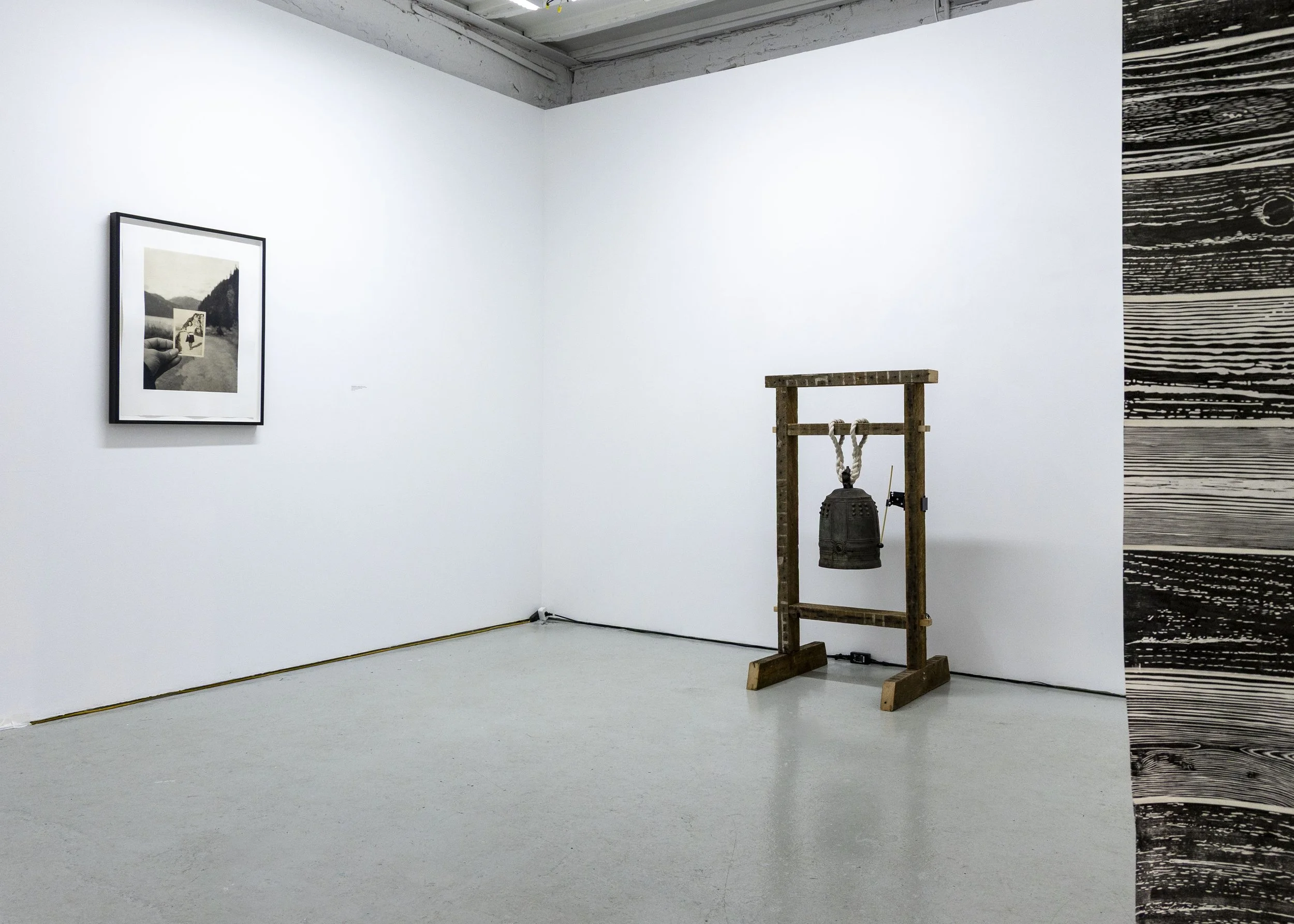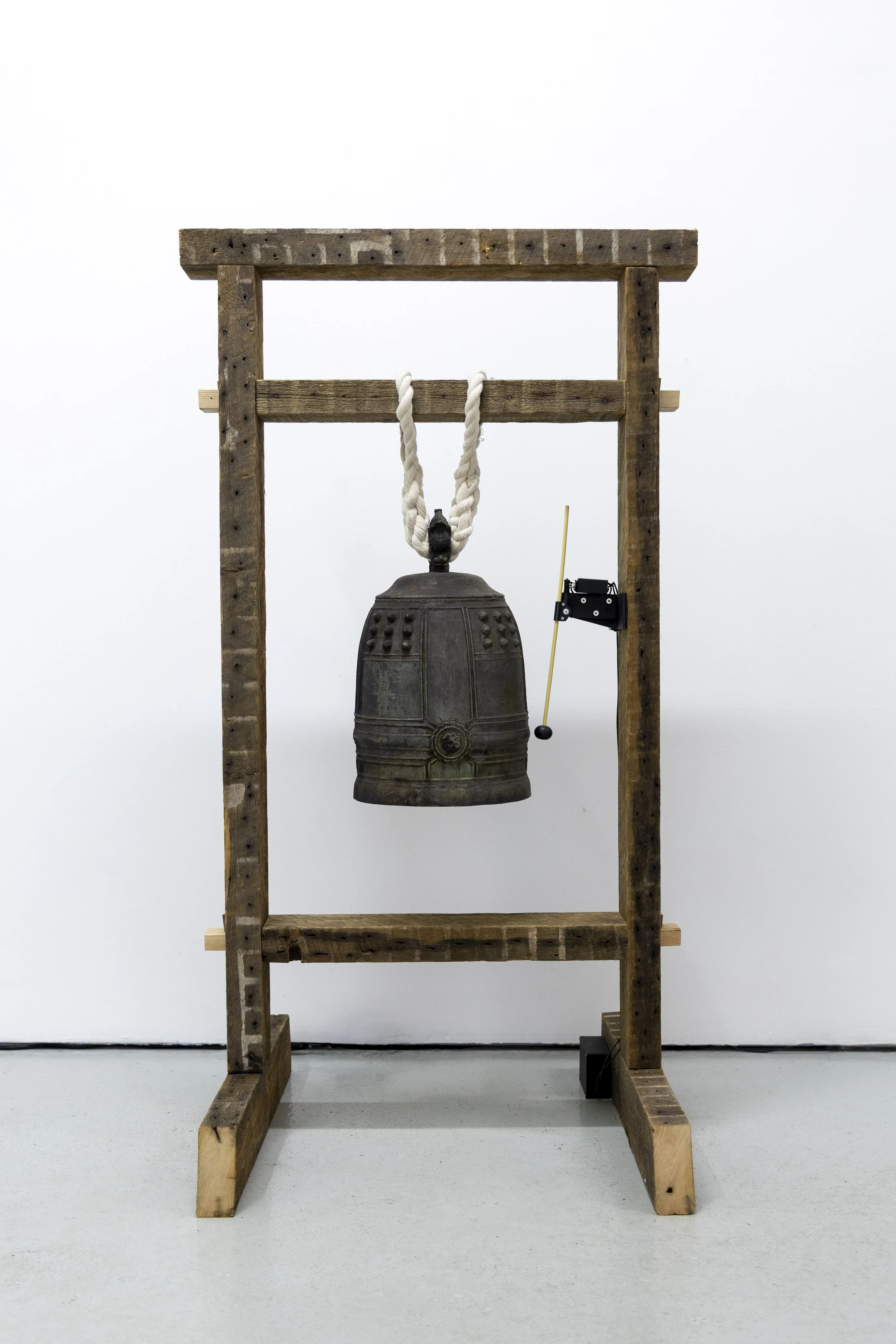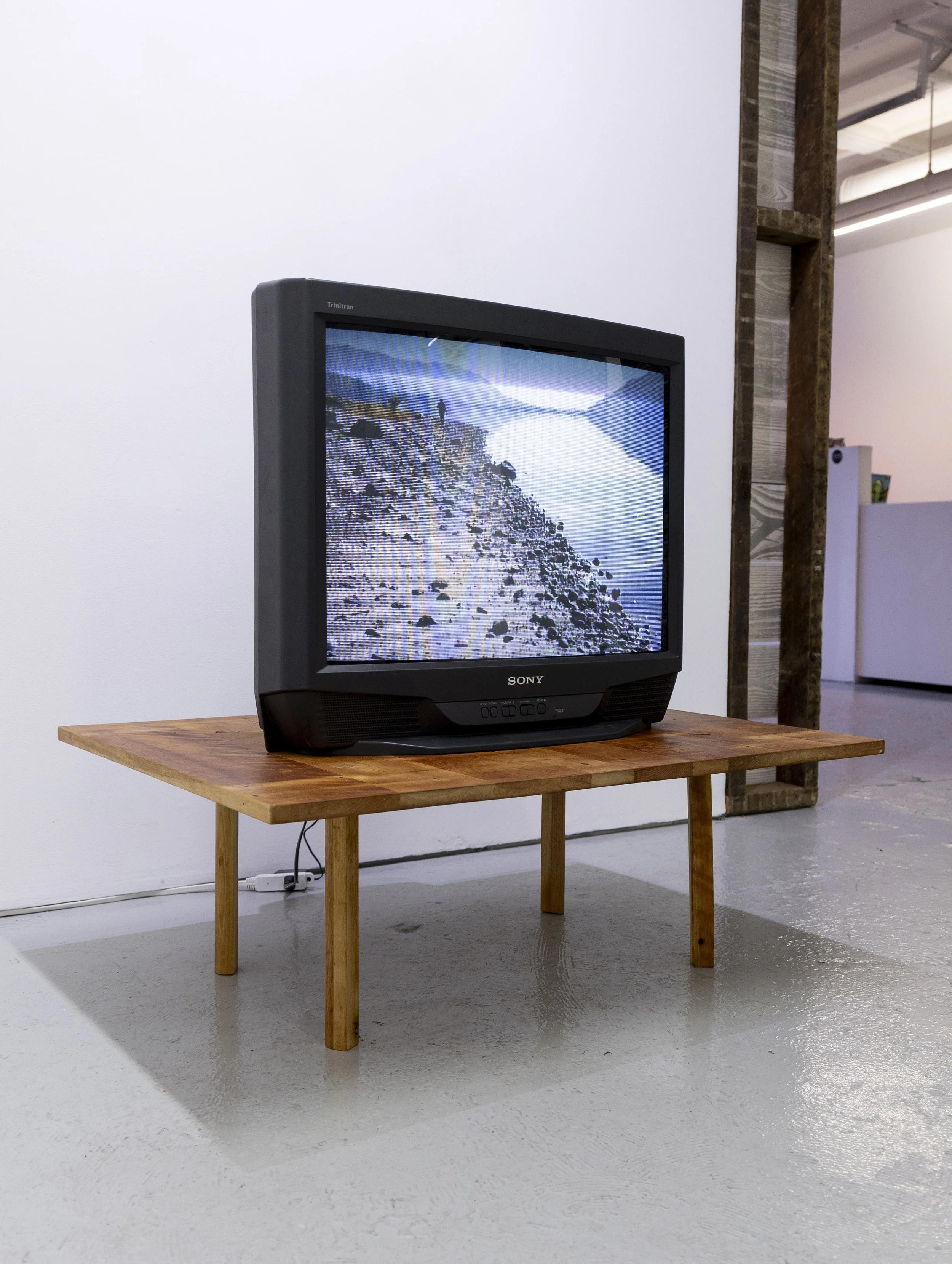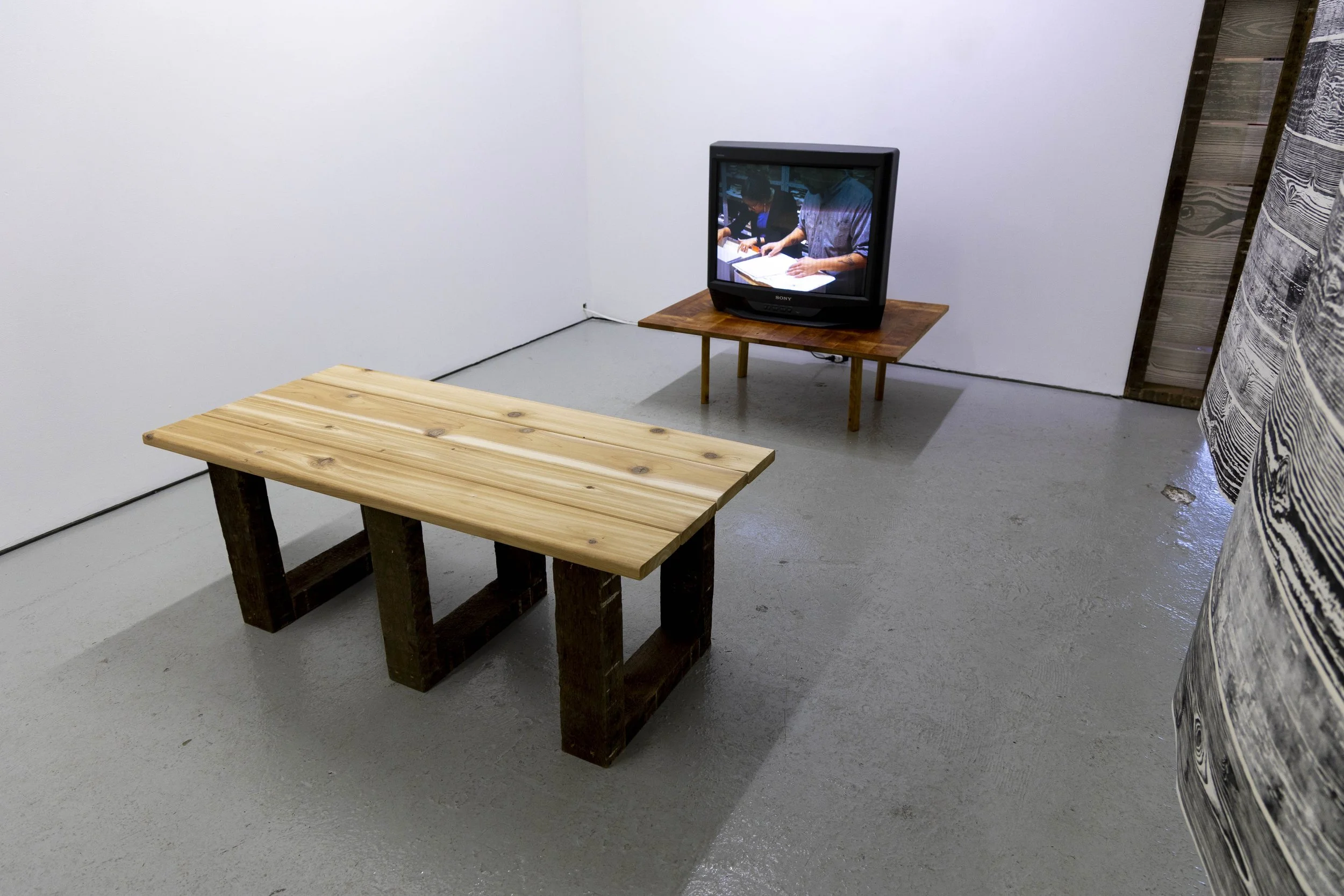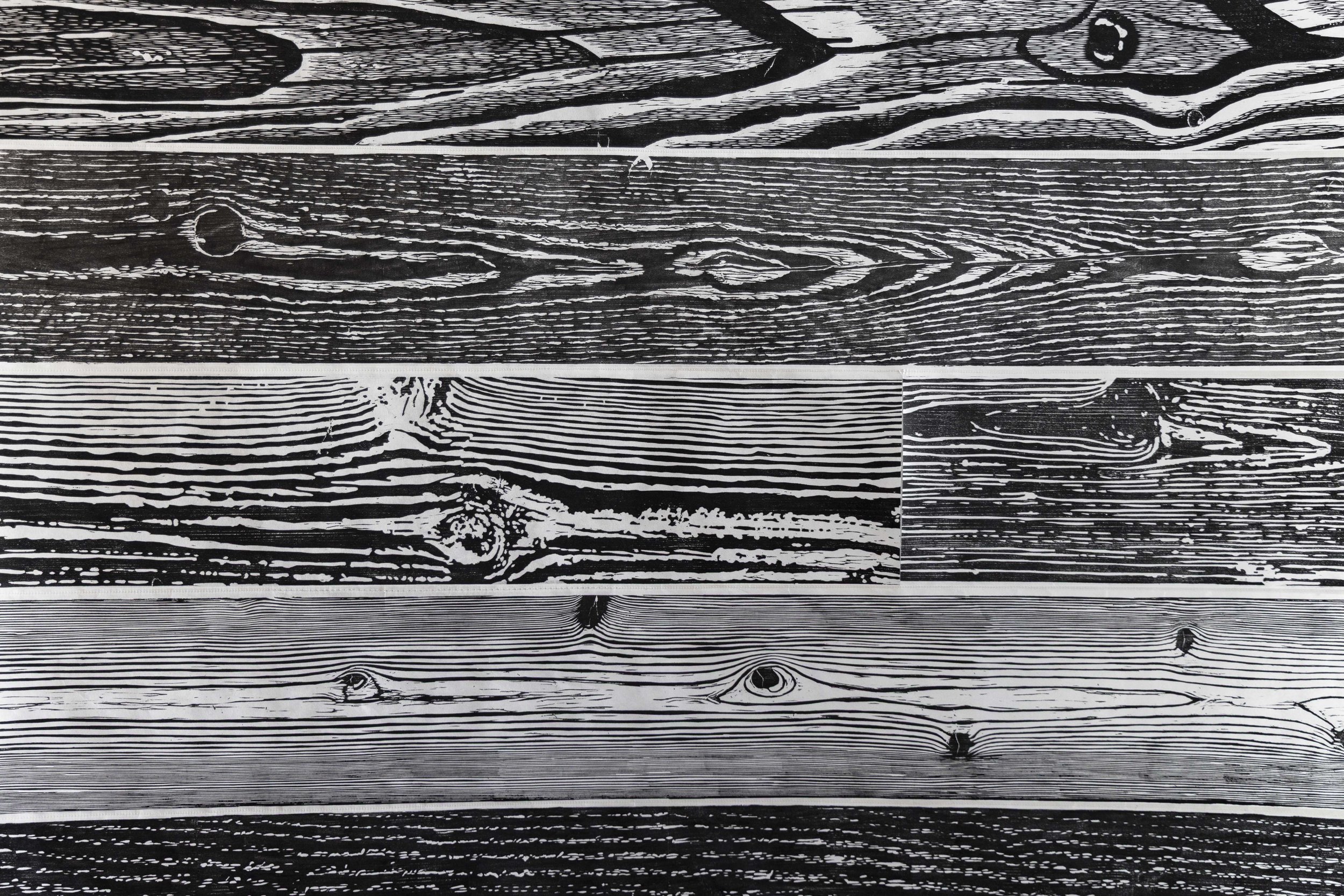
Paradise (2025) is a multimedia installation by Mitchell Akiyama and Emma Nishimura that addresses the complexities of intergenerational inheritance. Comprising woodblock and photopolymer gravure prints, video, and sonic sculpture, the work offers a subtle, layered reflection on the artists’ relationship to the legacy of the Japanese Canadian Internment, to which their paternal grandparents were subjected.
Akiyama and Nishimura’s families have been entwined since their Anglo-Canadian mothers met and became close friends while watching their Japanese Canadian fathers play hockey. The exhibition’s title, Paradise, refers to a childhood summer day at a cottage in Northern Ontario that has become family lore. Akiyama, Nishimura, and their siblings spent an afternoon catching frogs and built an elaborate structure out of sand for their captives, which they called “Frog Paradise.” For four mixed-race children, raised with a sense of safety and belonging that was in stark contrast to their Japanese grandparents’ upbringing, this moment was a utopia. This was less so for the frogs, who likely didn’t live out the day.
For Akiyama and Nishimura, now adults with families of their own, this experience led to the realization that one person or group’s utopia might be another’s living nightmare. Ostensibly seeking to preserve the safety of its largely white, settler population, the Canadian government forcibly relocated and interned Japanese Canadian citizens, many of whom had never visited Japan – a provisional utopia rooted in discrimination. The various prints, sculptures, and video works included in Paradise represent Akiyama and Nishimura’s efforts to understand the complexities and paradoxes of this legacy as it moves and shifts across generations.